
How to choose a Nextep product by foot zone and type of discomfort
The essentials
When your feet hurt, the first filter is not the brand on the package — it is where it hurts and how it hurts.
Heel (especially first steps in the morning) → heel cushioning and, sometimes, arch support.
Burning under the toes (ball of the foot) → metatarsal offloading — not a bunion corrector.
Side bump that rubs the shoe → friction protection and/or progressive alignment, depending on your goal.
Toes that overlap or curl → separator / stabilizer, not a “generic” insole.
This is a decision map. It does not replace a podiatry visit.
Contents
1. Why “foot pain” needs a map, not a catalog
3. Heel: plantar fasciitis, heel spur, and first-step pain
4. Arch and midfoot: the tired-plant feeling
5. Ball of the foot and metatarsalgia
6. Bunions: friction, alignment, or both
7. Toes: claw, hammer, and rubbing between them
8. Quick table: zone → support type
10. When to see a professional
Why “foot pain” needs a map, not a catalog
You want relief. Fair. But foot pain is a wide label: plantar fasciitis, metatarsalgia, a bunion that rubs, a claw toe, or simple end-of-shift fatigue.
If you grab “anything with silicone” without locating the zone, you can buy the wrong piece. A bunion corrector does not unload the ball of the foot. A metatarsal pad is not a bunion corrector. A heel cup does not fix lateral big-toe friction.
Nextep talks to the end consumer with specialist clarity: understand the problem first, then the support type. Products are sold through orthopedic shops and authorized retailers — not via brand D2C checkout.
Step 1: find the zone
Before product names, point to the center of the discomfort:
| Zone | Typical feel | Practical clue |
|---|---|---|
| Heel (plantar or inner edge) | Sharp first steps; eases a bit with walking; returns after long standing | Think plantar fasciitis / fascia overload; heel spur may show on imaging |
| Arch / midfoot | Diffuse fatigue, tightness, “unsupported” foot by evening | Arch support and gait load sharing |
| Ball of foot (under toe bases) | Burning, “pebble in the shoe,” plantar calluses | Metatarsalgia / overload under metatarsal heads |
| Side of the big toe | Bump that rubs, redness, pain in pointed shoes | Bunion (hallux valgus): protect and/or align |
| Toes 2–5 | Curled toe, dorsal corn, or rubbing between toes | Hammer/claw toe; interdigital friction |
If the whole foot feels sore, prioritize the zone that most limits walking. That is usually where the first support should focus.
Heel: plantar fasciitis, heel spur, and first-step pain
Per clinical references such as Mayo Clinic, plantar fasciitis is among the most common causes of heel pain: irritation of the band running from the heel toward the toes. The classic pattern is a stabbing sensation with the first morning steps or after sitting.
A heel spur may appear on X-ray alongside that overload. The spur itself is not always the pain generator; fascia tension and impact often are.
Support types that fit when the heel is the main zone:
Silicone heel cup (such as NXT001): cushions heel impact and may help relieve discomfort linked to heel spur and plantar fasciitis.
Arch-support insole (such as NXT005): if the arch also feels like it collapses or the midsole tires out, longitudinal support helps redistribute load.
What not to expect:
That a heel cup “cures” plantar fasciitis or “removes” a spur.
That the accessory alone fixes a rigid, unpadded shoe and a 10-hour standing shift.
Pain at the back of the heel (Achilles) is a different map than plantar stabbing. Get a professional read before guessing.
Arch and midfoot: the tired-plant feeling
Some people do not describe a heel stab — they describe midsole fatigue, cramping, or a flat-feeling foot that gives out late in the day.
That usually points to an arch-support insole, not a pad stuck only under the forefoot.
The arch insole NXT005 is designed to support the longitudinal arch and absorb walking impact. In the Nextep catalog it relates to flat feet and plantar fasciitis when the arch is part of the story.
Human tip (not a slogan): burning localized under the toes → look at the ball of the foot. General midsole fatigue → look at the arch.
Ball of the foot and metatarsalgia
Metatarsalgia is pain in the ball of the foot — the plantar area just behind the toes. Mayo Clinic links it to overload, tight or high-heeled shoes, impact sports, and deformities that shift pressure (including a bunion that forces other metatarsals to carry more load).
The right support type here is metatarsal offloading:
Metatarsal pad NXT016: silicone cushioning for the forefoot. Not a bunion corrector or bunion protector.
Fabric-sleeve pad NXT013: TPE gel + fabric; can also be worn barefoot.
Metatarsal-button insole NXT002: full insole when you need the button aligned under the toe bases.
Adhesive metatarsal pad NXT009: sticks inside the shoe for forefoot cushioning (useful in heels). Forefoot / metatarsal zone only. Never for the heel.
If a bunion and metatarsalgia coexist, you may need lateral friction protection and forefoot offloading as separate jobs. One piece rarely does both well.
Bunions: friction, alignment, or both
A bunion (hallux valgus) is the bump at the base of the big toe. It hurts from shoe rub, joint pressure, or because the toe drifts and redistributes forefoot load.
Clarify your goal first:
| Goal | Support type | Nextep line example |
|---|---|---|
| Stop the shoe from rubbing | Friction sleeve / protector | Bunion sleeve NXT017 |
| Separate and align progressively | Corrector / separator | Corrective separator NXT004 |
| More severe cases / rest use | Hinged corrector (night or rest use per product sheet) | Hinged corrector NXT006 |
Critical: NXT017 protects from friction; it is not a toe corrector. NXT016 (metatarsal pad) is not a bunion corrector. Mixing those names is the most expensive counter mistake.
No accessory “eliminates” a bunion. Products can relieve, protect, and support progressive alignment under professional guidance.
Toes: claw, hammer, and rubbing between them
If the issue is curled toes, overlapping toes, or corns between them, the map points to separators and digital protectors, not a heel cup.
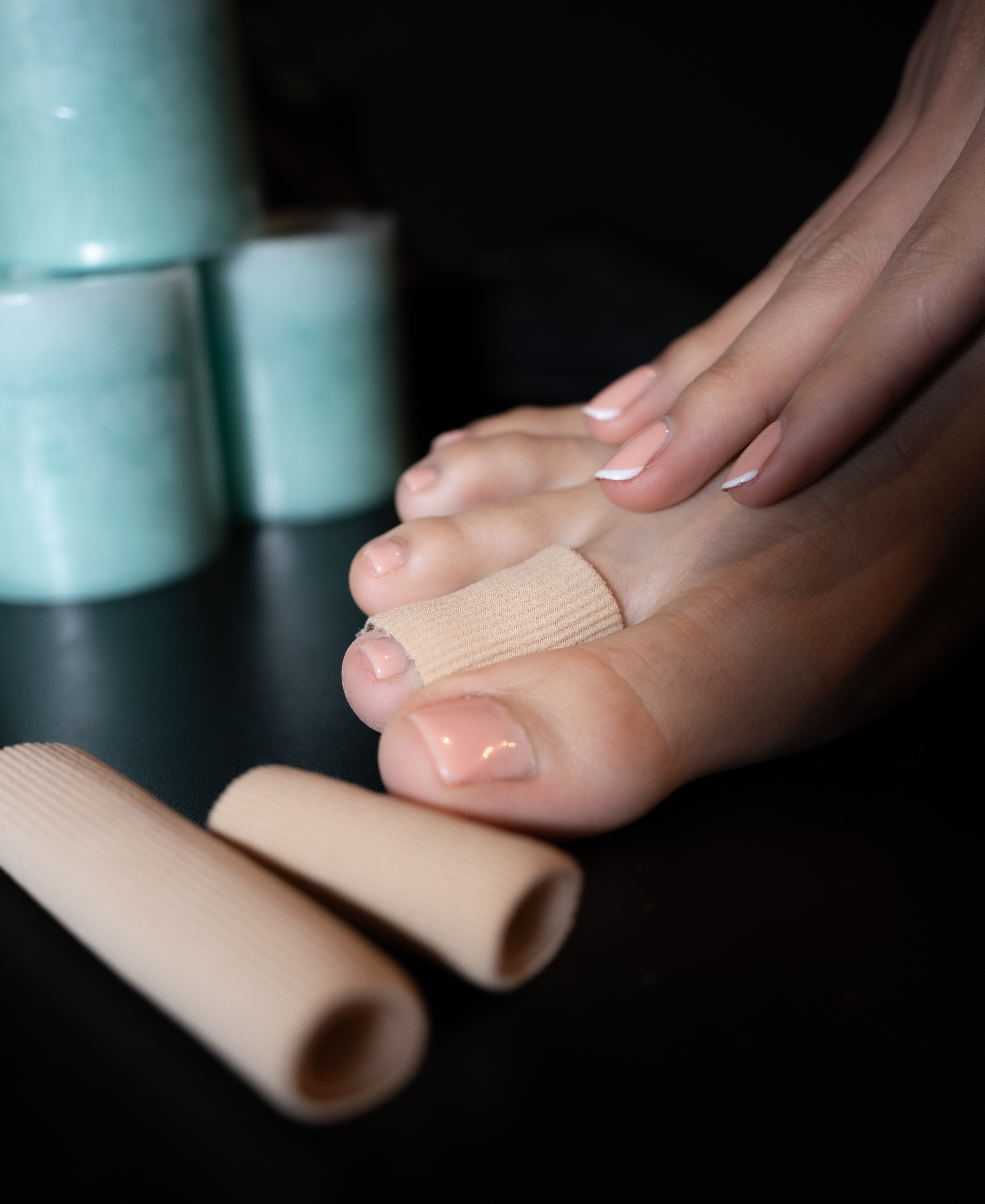
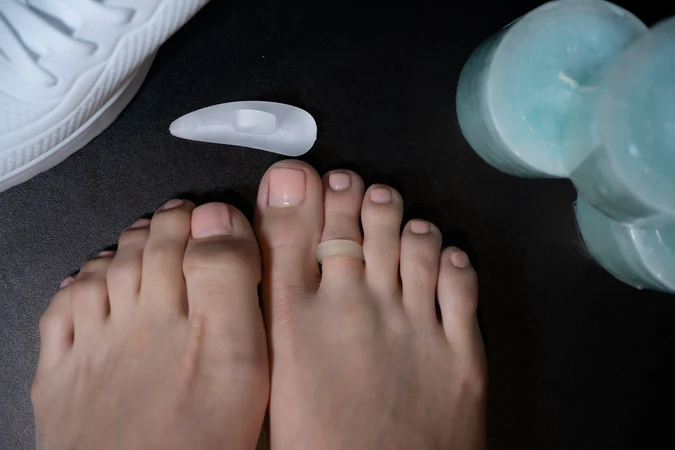
Gel toe separator (such as NXT012): helps reduce claw-toe contracture and interdigital rub.
Toe cap or cut-to-fit tube: when friction is focal on the nail or tip (see also the blog guide on ingrown toenails when relevant).
Shoes still rule: a narrow toe box + a drifted toe = guaranteed rub. An accessory fighting a cramped toe box loses.
Quick table: zone → support type
| If it hurts here… | Support type to look for | Nextep pieces that illustrate the zone |
|---|---|---|
| Plantar heel / spur / plantar fasciitis | Heel cup; sometimes arch insole | NXT001 · NXT005 |
| Arch / tired midsole | Arch-support insole | NXT005 |
| Ball of foot / metatarsalgia | Metatarsal pad or button insole | NXT016 · NXT013 · NXT002 · NXT009 (forefoot only) |
| Bunion (friction) | Friction sleeve / protector | NXT017 |
| Bunion (alignment) | Corrector / separator | NXT004 · NXT006 (by severity and use) |
| Claw toes / interdigital rub | Separator / digital protector | NXT012 · protectors line |
Check sizes on the product page and the site size guide. Pure silicone and TPE gel are cared for differently: silicone washes with mild soap without talc; TPE gel + fabric often needs talc so it does not get sticky.
Common buying mistakes
1. Buying by pathology name on the pack without locating the real pain zone.
2. Using a metatarsal pad as a bunion corrector (or the reverse).
3. Sticking a forefoot adhesive pad on the heel (NXT009 does not go there).
4. Expecting the accessory to fix a shoe that crushes the foot.
5. Wearing a rest-only corrector on a work shift (or the reverse) without reading the use indication.
6. Ignoring diabetes, neuropathy, or poor circulation: the bar for seeing a clinician is lower.
When to see a professional
See a podiatrist or physician if any of these show up:
Pain that stops you from weight-bearing or lasts weeks without improvement.
Significant swelling, heat, an open wound, or infection signs.
Tingling, numbness, or loss of sensation.
Diabetes or circulation problems.
A stiff bunion or toes that limit everyday shoes.
Uncertainty between fasciitis, neuroma, or another cause: the map orients; it does not diagnose.
Next step (no guessing)
You now have the filter: zone → type of discomfort → type of support.
To browse by category, explore Nextep products, pads, correctors, or protectors. To purchase, ask at your trusted orthopedic shop or check where to find authorized retailers.
Real care for your feet: map first; then the piece that fits.